Blog

  • Which Settings Work Well for a 3 Carat Lab-Grown Diamond Ring?

    Which Settings Work Well for a 3 Carat Lab-Grown Diamond Ring?

    A 3-carat lab-grown diamond is already going to stand out, so you don’t necessarily need a setting that adds even more to it. It really comes down to the kind of ring you like.

    You might want something simple where the diamond gets all the attention, or you may like a ring with more sparkle around it. You may also find that a setting you liked on a smaller ring looks quite different once you put a 3 carat diamond in the middle.

    That’s why it helps to see how each setting works with a 3 carat center before you start narrowing down your options.

    How Do Different Settings Look With A 3 Carat Diamond?

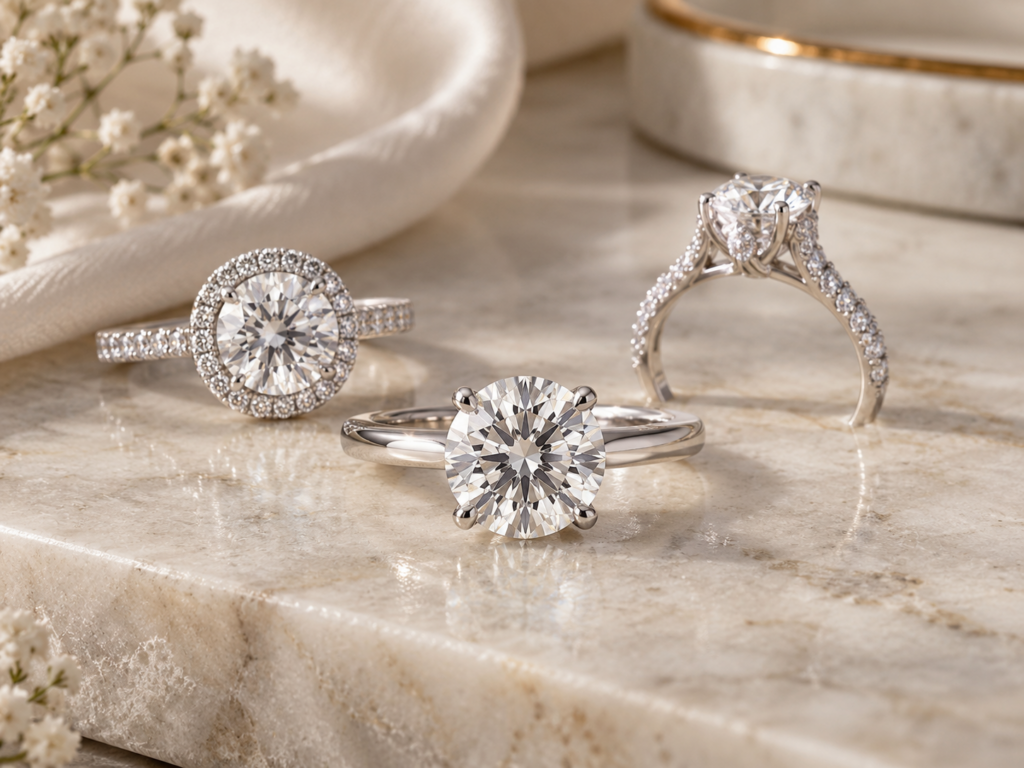
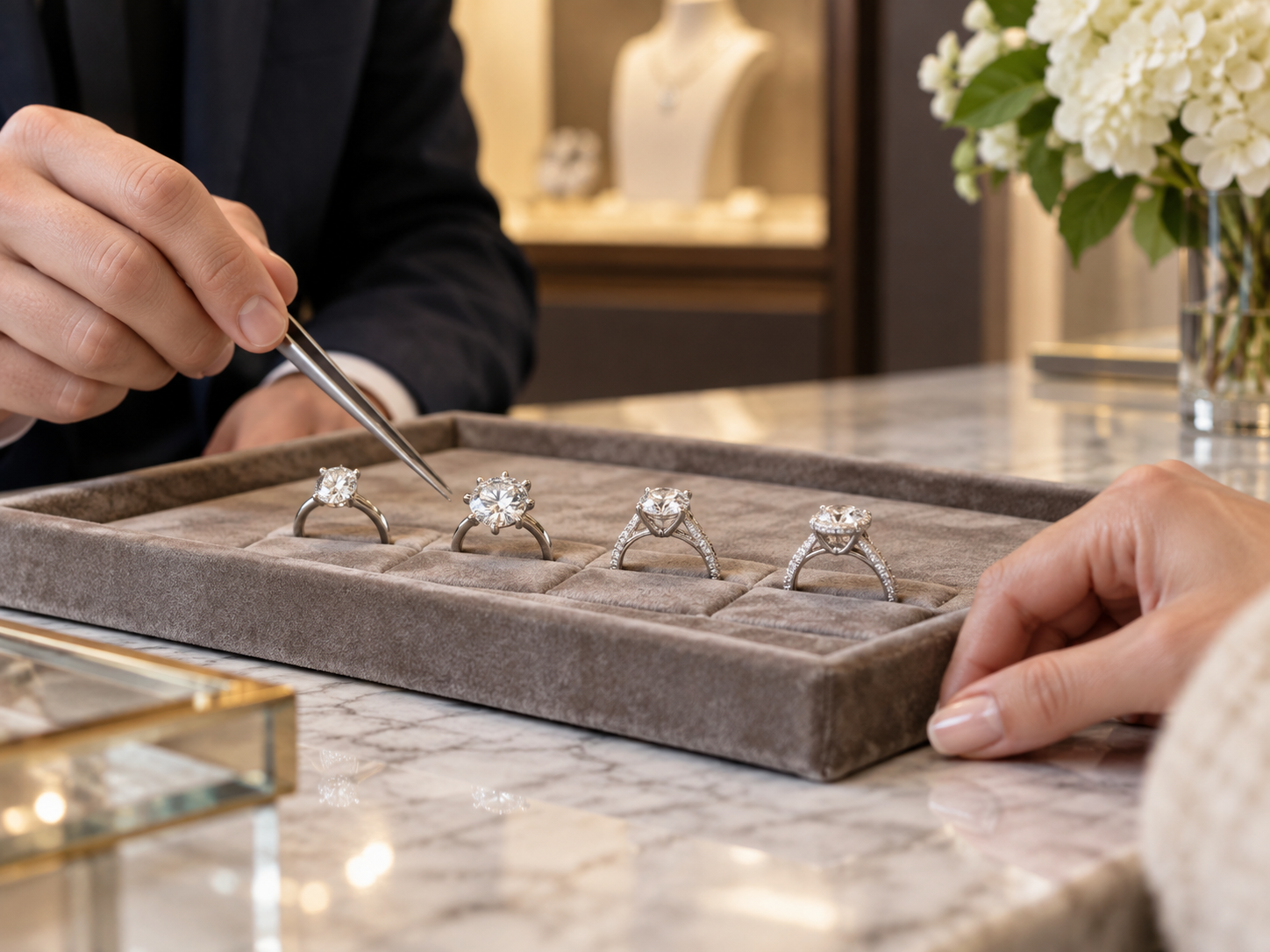
    Here’s a quick comparison before we get into each one:

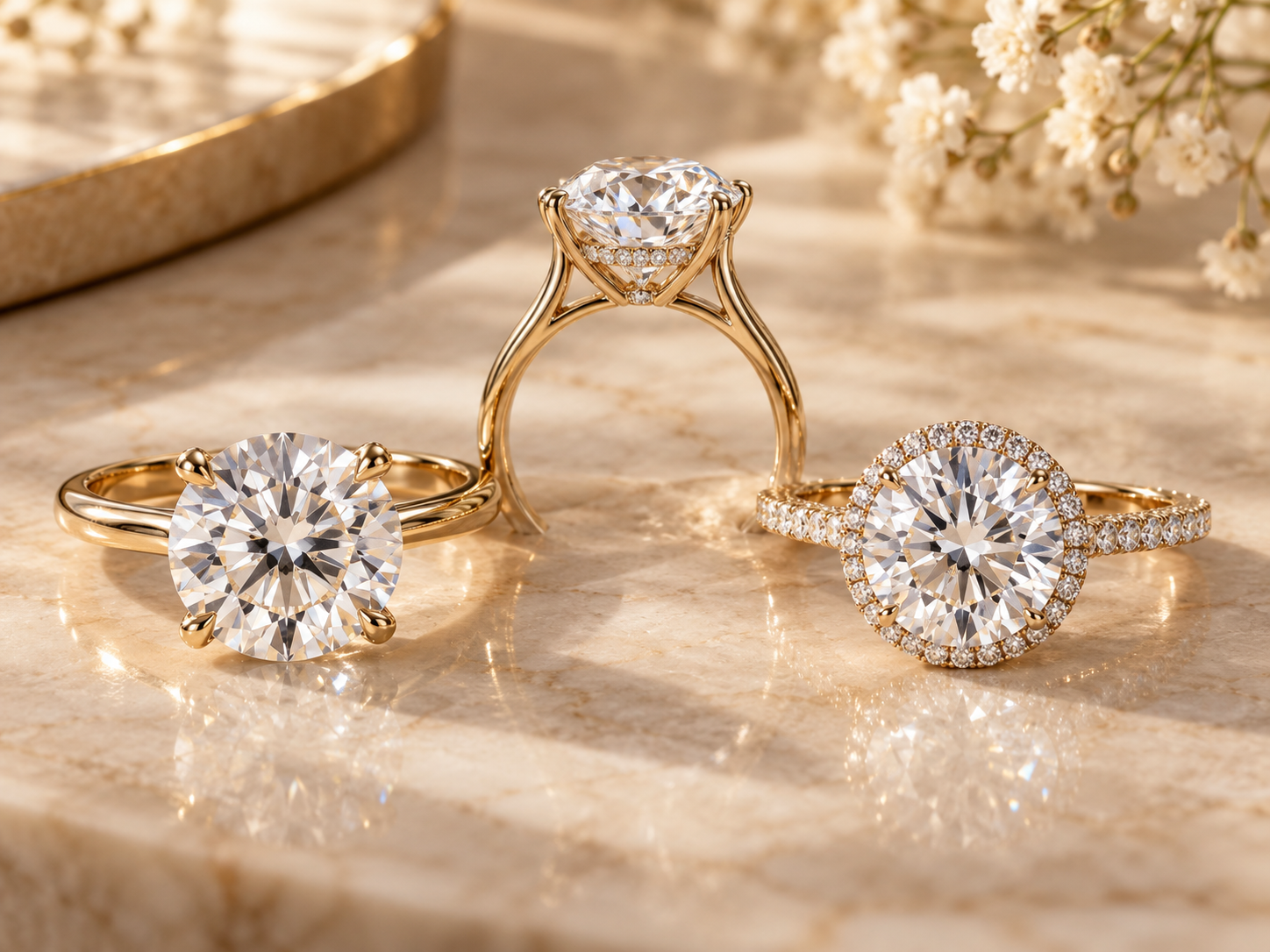
    Setting What it adds Overall look
    Solitaire Very little around the center Simple and center-focused
    Pavé Small diamonds along the band More sparkle without surrounding the center
    Hidden halo Diamonds underneath the center Simple from the top, more detail from the side
    Halo Diamonds around the center Wider and more diamond-heavy
    Three-stone Two side stones More width across the finger
    Bezel Metal around the edge of the center Clean and more defined

    With a 3 carat center, you’ll notice these differences quite easily. A simple setting can still look substantial, while adding diamonds around the center can make the entire ring feel much bigger.

    Is A Solitaire Setting A Good Choice For A 3 Carat Diamond?

    If you want the center diamond to do most of the talking, a solitaire is the simplest option. There’s very little around the stone, so its shape stays easy to see.

    The band can also make a difference here. A very thin band can make a 3 carat diamond look even more prominent, while a slightly wider band gives the ring a different balance.

    Some people love that contrast: a large center stone with a very simple band. Others look at a solitaire and feel that the rest of the ring needs a little more going on. If you’re in the second group, choose settings that add detail to the band or around the center.
    Does Pavé Work Well With A 3 Carat Center Stone?

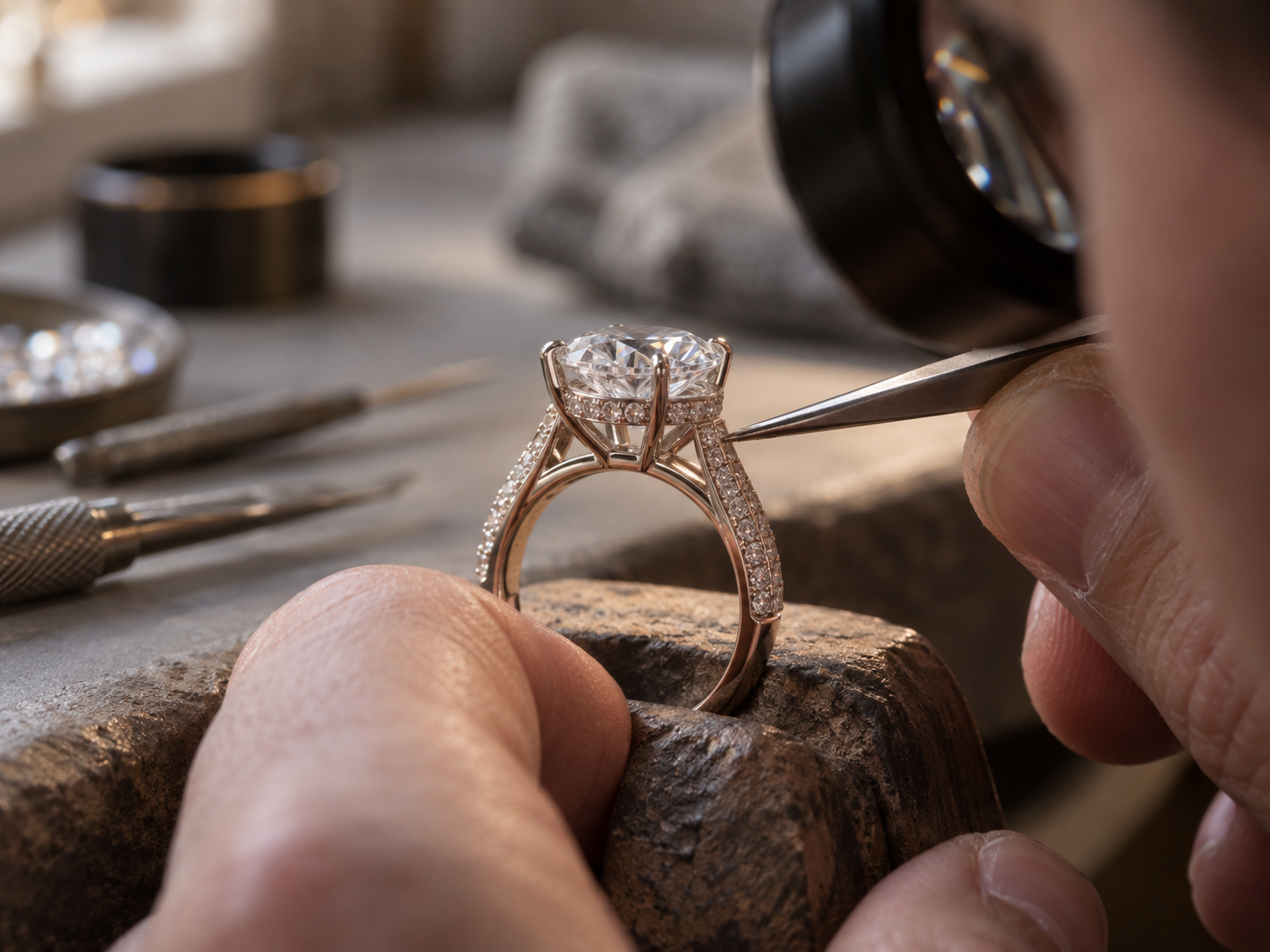
    Pavé puts small diamonds along the band, so you get extra sparkle without adding diamonds around the 3 carat center.

    When comparing pavé rings, look at how far the diamonds continue down the band and how wide the band is. A lighter pavé design keeps things simple, while more coverage gives you a much sparklier ring.

    Does A Hidden Halo Change The Look Of A 3 Carat Ring?

    A hidden halo sits underneath the center diamond, so you won’t see the smaller diamonds when looking straight at the ring from above.

    You’ll notice them more from the side, where they sit around the base of the center stone. This gives you some extra sparkle without changing the outline of the 3-carat diamond from the top.

    When comparing hidden halo rings, look at the side profile too, since the setting height affects how much of that detail you can see.

    Is A Halo Too Much Around A 3 Carat Diamond?

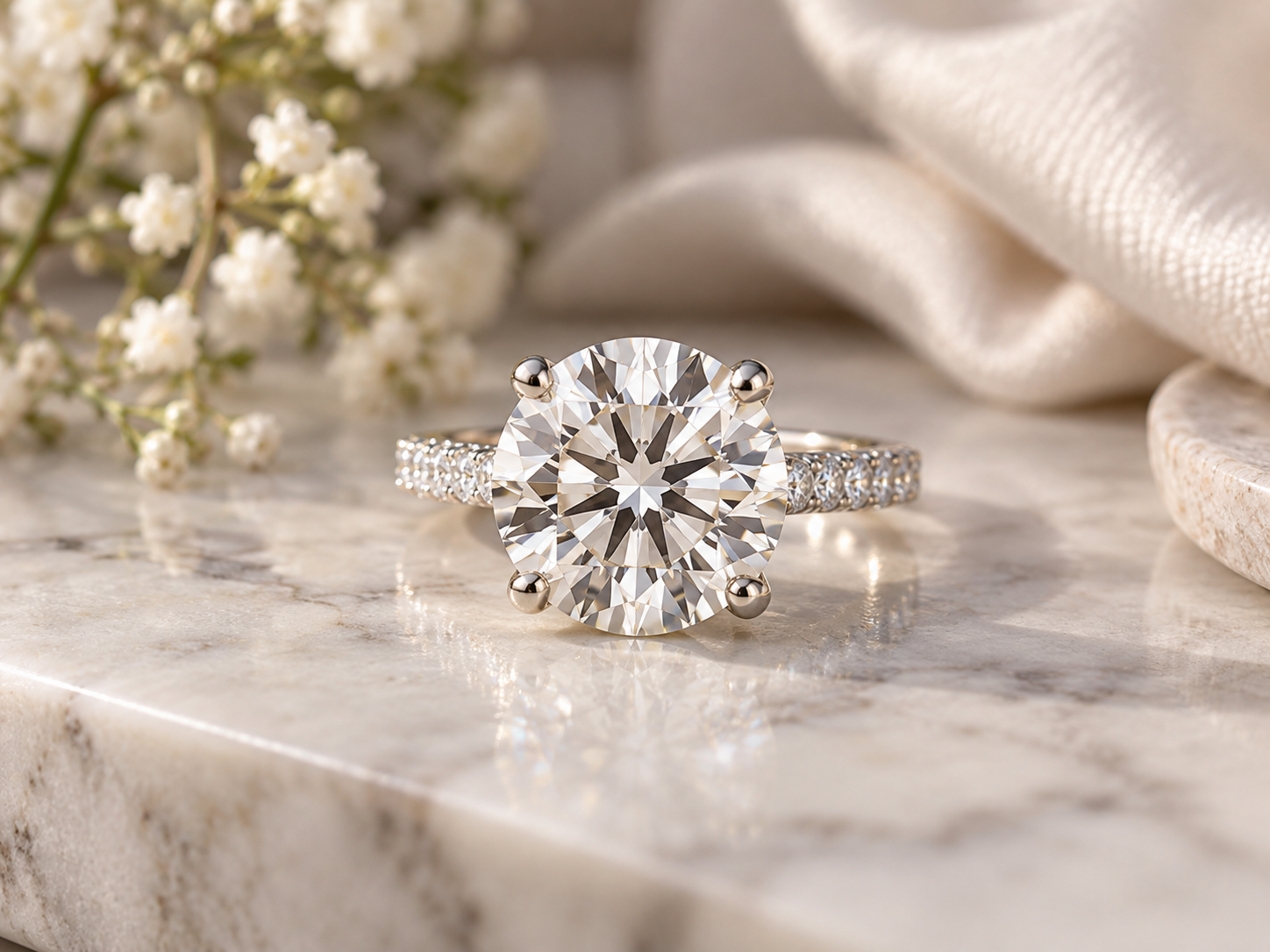
    A traditional halo surrounds the center with smaller diamonds, making the ring look wider overall.

    With a 3 carat diamond, that can create a very full look across the finger. This is especially noticeable with elongated shapes like oval and pear, where the halo adds width around an already elongated center.

    If you want the shape of the center diamond to be more noticeable on its own, compare a halo with a solitaire before deciding.

    How Does A Three-Stone Setting Change A 3 Carat Ring?

    Two side stones add width and make the design feel fuller across the finger.

    The side stones can be much smaller than the 3 carat center, or large enough to become a bigger part of the design.

    Their shape matters too. For example, an emerald-cut center with step-cut side stones will look very different from a round center with tapered side stones.

    So if you’re drawn to three-stone rings, look at the proportions of all three diamonds together rather than only focusing on the size of the center.

    Does A Bezel Work With A 3 Carat Diamond?

    A bezel gives a 3 carat diamond a completely different look because the metal becomes much more visible around the stone.

    Instead of prongs holding the diamond at a few points, the setting creates a metal outline around its edge. With a larger diamond, that outline becomes a noticeable part of the ring rather than just a small detail.

    It can look particularly good if you like clean, defined shapes. Just keep in mind that you won’t see as much of the diamond’s edge.

    How Do You Choose Between These Settings For A 3 Carat Diamond?

    A quick way to narrow down your options is to start with the kind of look you want from the finished ring:

    If you want… Compare
    The center diamond to stand out Solitaire or pavé
    More detail from the side Hidden halo
    A wider, more diamond-heavy look Traditional halo
    More width across the finger Three-stone
    A defined outline around the stone Bezel

    The main thing is to compare what each setting adds, because a 3 carat center already brings plenty of presence on its own.
    Frequently asked questions

    Are some settings more secure or durable for daily wear with a large diamond?

    Bezel settings cover more of the diamond, while prongs leave more exposed. Your daily activities can also help you choose a setting that works for everyday wear.

    Which settings are most flattering for different finger shapes or sizes?

    Oval and pear diamonds can create a longer look, while wider settings add more coverage. Band width also changes how a 3 carat ring looks on your finger.

    Can these settings be customized for a 3 carat diamond?

    Yes, you can customize details like the metal, band width, side stones, and diamond accents. Your diamond’s shape will also affect the available options.

    Is solitaire or pavé better for a 3 carat diamond?

    A solitaire keeps attention on the center diamond, while pavé adds sparkle along the band. The better choice depends on how much detail you want.

    Does a 3 carat diamond need a halo?

    No. A 3 carat center already has plenty of presence. A halo adds diamonds around it, making the ring look wider.

    Find A 3 Carat Ring Setting You Love At Candor

    Once you have a better idea of the setting you want, the easiest next step is to see how these styles actually look with a larger center diamond.

    Explore Candor’s engagement ring collection to compare different settings, band styles, and diamond details in finished rings. Compare options side by side to get a better sense of which combination feels right for you.
     

  • What to Look for in a 3 Carat Lab-Grown Diamond Ring Before You Buy

    What to Look for in a 3 Carat Lab-Grown Diamond Ring Before You Buy

    Two diamonds with the same weight can look quite different once you see their measurements, shape, clarity, and overall appearance.

    And once that diamond is going into a ring, the setting matters too. It can change how the center stone looks, how high it sits, and how the finished ring looks on your hand.

    Here’s what to check before you buy, from the grading report to the details you can only really judge by looking at the actual diamond.

    Can Two 3 Carat Diamonds Look Different Even If Both Say 3.00 Ct?

    Absolutely. Two diamonds can both be 3.00 ct and still look pretty different side by side.

    That’s because carat tells you the weight, not how much of the diamond you actually see from the top. One may spread more of its weight across the face, while another carries more of it below the girdle.

    IGI also notes that diamonds with the same carat weight do not necessarily look the same size.

    So when you compare options, take a look at the actual measurements too. The difference can become even more noticeable once the diamond is set, especially if you’re comparing different shapes or setting styles.

    What Changes With the Diamond Shape?

    A 3 carat round should not be judged in the same way as a 3 carat oval or emerald cut. Each shape has a few different things you’ll want to keep an eye on. Here’s a quick look:

    Shape  What is worth looking at closely 
    Round Proportions, symmetry, and how evenly the diamond returns light
    Oval Bow-tie, outline, and length-to-width ratio
    Pear Bow-tie, symmetry, and the balance between the shoulders and point
    Marquise Bow-tie, symmetry, and whether the two tips line up well
    Emerald Clarity through the broad step facets and the length-to-width look
    Radiant Facet pattern and how evenly it looks across the stone
    Cushion Facet pattern, outline, and whether you prefer a squarer or longer shape

    There isn’t one perfect proportion for every fancy shape. With ovals, cushions, and other elongated cuts, the outline you personally like can matter just as much.

    What Should I Watch For In A 3 Carat Oval, Pear, Or Marquise?

    If you are looking at an elongated brilliant shape, pay attention to the middle of the diamond.

    That darker area across the center is known as a bow-tie. It is common in ovals, pears, and marquises, and some amount of contrast is completely normal.

    The question is how strong it is and how it behaves when the diamond moves. A subtle bow-tie may barely bother you, while a broad, dark area that stays visible from several angles can become the first thing you notice.

    GIA research found that people tended to react less favorably to broad, dark, persistent bow-tie patterns, while subtler patterns produced more varied preferences.

    If you’re watching an oval, pear, or marquise on video, watch how the darker area looks as the stone moves.

    Is VS1 Or VS2 Enough For A 3 Carat Lab-Grown Diamond?

    Yes, VS1 or VS2 can be enough for a 3 carat diamond. You want to see what the inclusions look like in the actual stone.

    IGI considers their size, number, location, and how easy they are to see when giving a clarity grade. So two diamonds with the same grade can still look different. For example, an inclusion near the edge may not bother you at all, while one closer to the center might be much easier to notice.

    If a VS diamond looks clean to you, there may be no reason to pay more for VVS.

    If Two 3 Carat Diamond Rings Look Similar, How Do I Choose?

    If you’re comparing two rings and both look good on paper, look at the finished rings side by side and check:

    • Compare the center diamond’s length and width to see if one has a larger face-up size.
    • Look at the diamond shape and proportions, especially if the two rings use the same shape.
    • Compare how much metal surrounds the center stone and how the setting changes its overall look.
    • Check the band width and how it looks next to a 3 carat center diamond.
    • Look at the side profile to compare the setting’s height.
    • Watch the videos, if available, since movement can show sparkle differences that a still photo may not.

    Then compare the prices and grading reports once you’ve decided which ring looks better to you.

    Frequently Asked Questions

    What do terms like “girdle,” “bow-tie,” and “face-up” mean for a first-time buyer?

    The girdle is the edge around a diamond, “face-up” means looking at it from the top, and a bow-tie is the darker area you may see across the center of some oval, pear, and marquise diamonds.

    Is a bigger-looking 3 carat diamond always better?

    Not always. A diamond can look larger from the top, but that alone doesn’t tell you how well it looks overall or whether you’ll actually prefer it.

    What measurements should I compare on a 3 carat diamond?

    Start with the length, width, and depth. If you’re looking at an elongated shape, check the length-to-width ratio too, since it can change how the diamond looks.

    Does a 3 carat diamond need to be D color?

    D gives you the highest color grade, but you don’t have to choose it. Compare nearby grades and see how much of a difference you can actually see.

    How can I view diamonds or videos before purchasing online?

    Most online diamond retailers provide photos and videos on the product page. For a closer look, you can also contact the retailer or book a virtual appointment to view and compare your options before buying.

    See The Difference Before You Decide

    When you’re choosing a 3 carat lab-grown diamond ring, there’s more to look at than the diamond itself. The shape, setting, band, and how they look together can change how the finished ring looks on your hand.

    If you have a couple of options in mind and can’t decide between them, a Candor gemologist can help you compare the rings and understand what you’re seeing before you buy.

    Compare your options with a Candor gemologist.


  • How To Choose A Setting For A 2 Carat Lab-Grown Diamond Ring

    How To Choose A Setting For A 2 Carat Lab-Grown Diamond Ring

    A 2 carat diamond already gives you a lot to work with. The setting you choose can make the ring look simple and clean, add more sparkle, or make the center stone stand out even more.

    But with so many setting styles to choose from, it can be hard to know which one actually makes sense for a 2 carat diamond. You also want to think about how the ring will look on your hand and how comfortable it will be to wear every day. Let’s look at the options and what to keep in mind before you choose.

    Start With How The 2 Carat Diamond Is Actually Held

    Turn the ring around and look at it from the side. You’ll see things there that you can’t really tell from a top-down photo.

    Look at the part holding the diamond, how it connects to the band, and how much of the stone is exposed. With prongs, more of the diamond is left open. A bezel covers the edge with metal, giving the ring a more enclosed look.

    There’s another reason to look closely at the actual diamond. Two 2 carat stones can have different lengths, widths, and depths even when they have the same carat weight. The setting has to fit those measurements.

    4 Prongs Or 6 Prongs For A 2 Carat Round

    Both can work well with a 2 carat round diamond. Four prongs leave more of the stone visible and give the setting a lighter, more open look. Six prongs add two more points of contact around the diamond and can make the round outline feel a little more defined.

    4 prongs 6 prongs
    Look More open around the diamond Frames the round shape more closely
    Stone visibility Shows more of the diamond’s edge Covers a little more of the edge
    Support Held at 4 points Held at 6 points
    You may prefer it if You like a cleaner, lighter look You want a little more support around the center

    The size and placement of the prongs will also change how much of them you actually notice when you look at the ring.

    How High Should A 2 Carat Diamond Sit?

    This is one of those details you might not think much about when you’re looking at rings online. But once the ring is actually on your hand, you’ll notice the difference.

    A low-profile setting keeps the center closer to your hand. A higher setting lifts it up more, which you’ll notice from the side.

    A cathedral setting, for example, has shoulders that rise toward the center diamond. It gives the ring more height and a different side profile than a setting that sits closer to the finger.

    Think about your everyday life here. If you’re always pulling on sweaters, wearing gloves, or working with your hands, a tall center might get your attention more than you’d like.

    And there’s one more thing to check before you decide: how your wedding band will sit next to it. Some settings leave enough room for the band to sit right against the engagement ring, while others leave a small gap.

    The Diamond Shape Changes The Setting You Need

    A 2 carat round and a 2 carat pear may weigh the same, but you can’t treat them exactly the same when choosing a setting.

    The diamond’s shape changes where it needs support and how much of the stone you want the setting to cover. Here’s what that looks like across some of the most popular shapes:

    Diamond shape  What to look for in the setting 
    Round 4-prong, 6-prong, and bezel styles can all work
    Oval Prongs should secure the elongated outline without covering too much of it
    Pear The pointed end needs careful protection
    Marquise Both pointed ends need protection
    Princess Corners are exposed areas that need support
    Emerald or radiant The setting should match the actual length, width, and corner shape
    Cushion Prong placement needs to suit the particular cushion outline

    This is especially worth checking with pear and marquise diamonds. Their pointed ends are more exposed, so pay attention to how the setting protects them.

    How Should The Band Look Beside A 2 Carat Center?

    Now look at the band. It can make the same center diamond look quite different.

    A thin band leaves more space around the diamond, which can make the center look more noticeable. A wider band brings more metal into the design and gives the ring a heavier look overall.

    Then there’s pavé. A narrow pavé band might be about the same width as a plain band, but those small diamonds add extra sparkle and completely change the look.

    And if you love the look of a really thin band, take a look at how it connects to the center setting, not just how wide it looks from the top.

    Once The Structure Works, Choose The Style You Actually Like

    This is where you can stop thinking about measurements for a minute and just look at the ring.

    Style  What it adds to the ring 
    Solitaire Keeps most of the attention on the center
    Pavé Adds diamonds along the band
    Hidden halo Adds diamond detail below the center, especially from the side
    Halo Makes the overall top view wider
    Three-stone Adds more width and gives the side stones a visible role

    You don’t need a halo or pavé just because you’re choosing a 2 carat diamond. If you love a simple solitaire, let the center stone do the talking.

    Frequently Asked Questions

    Is 4 prongs or 6 prongs better for a 2 carat diamond?

    Both work for round diamonds. Four prongs look more open, while six give the stone two extra points of support.

    Is a low-profile setting better for a 2 carat diamond?

    Not always. It keeps the diamond closer to your finger, while a higher setting adds height.

    Can any setting hold a 2 carat diamond?

    No. The setting needs to match the diamond’s shape and measurements, not just its carat weight.

    What setting gives a 2 carat diamond more edge protection?

    A bezel covers more of the diamond’s edge with metal, giving it extra protection from bumps and knocks.

    Shop 2 Carat Lab-Grown Diamond Rings At Candor

    At Candor, we cut and polish diamonds in-house and make our jewelry settings in-house too. That means a 2 carat center can be considered together with the setting that will actually hold it, including its shape, measurements, prong placement, setting height, and how the finished ring will sit on your hand.

    Want to see the styles for yourself? Explore Candor’s Lab-Grown diamond engagement rings and take a look at different settings for larger center stones. 

    If you are choosing between two settings and cannot tell which will work better with your diamond, you can also book a virtual appointment with a Candor gemologist and compare the details before the ring is made.


  • 2 Carat vs 3 Carat Lab-Grown Diamond Ring: Size, Look and Price

    2 Carat vs 3 Carat Lab-Grown Diamond Ring: Size, Look and Price


    The jump from a 2 carat to a 3 carat diamond sounds huge. After all, that’s a whole extra carat. But the difference you see on the hand is smaller than that number might suggest.

    A 2 carat diamond already has plenty of presence, while a 3 carat stone gives you a larger look and more visual impact. It also comes with a higher price tag. So before you make the jump, it’s worth understanding how much bigger the diamond actually looks and what you’re paying extra for.

    2 Carat Vs 3 Carat Lab-Grown Diamond At A Glance

    2 carat 3 carat
    Weight 2 ct 3 ct
    Approx. round diameter 8.0 to 8.2 mm 9.2 to 9.4 mm
    Look on the hand Large and noticeable Larger and more dominant
    Finger coverage Substantial Covers more of the finger
    Overall feel Bold, while leaving room for the setting Center stone tends to lead the design
    Price Lower than a comparable 3 ct Higher than a comparable 2 ct

    The measurements above are for round diamonds. Other shapes can have very different dimensions at the same carat weight.

    How Much Bigger Does 3 Carats Actually Look Than 2 Carats?

    With round diamonds, going from 2 to 3 carats usually adds a little over 1 mm to the diameter. A 2 carat round is around 8.0–8.2 mm across, while a 3 carat round is around 9.2–9.4 mm.

    You can see that difference when the two are next to each other. But a 3 carat diamond isn’t 50% wider than a 2 carat just because it weighs 50% more. Carat measures weight, and some of that extra weight comes from the depth of the stone.

    Does Shape Change The Size Difference?

    Yes. Different shapes spread the weight differently. An oval or marquise, for example, can look longer than a round of the same weight.

    So when comparing 2 and 3 carats, it makes more sense to compare the same shape rather than two different shapes.

    You can also use our [diamond size visualizer] to see how different carat sizes compare.

    How Different Do 2 And 3 Carats Feel On The Hand?

    The difference is easier to notice once you see the diamonds on a finger.

    A 2 carat center diamond has a strong presence, but the setting can still shape the overall look. With a 3 carat center, the diamond takes up more attention, especially in a simple setting.

    Finger width matters here too. The same 3 carat diamond can look more dominant on a narrow finger than it does on a wider one.

    That does not make one size more “correct” for a certain hand. Some people like plenty of coverage. Others prefer the center stone to feel large without taking up as much finger space.

    2 Carat vs 3 Carat In Different Settings

    The setting can change how the difference between 2 and 3 carats looks once the ring is on your hand.

    Setting 2 Carat 3 Carat
    Solitaire The center stone stands out, while the band stays simple. The larger center takes most of the attention.
    Pavé The small diamonds along the band add detail around the center. The center still stands out, with extra sparkle from the band.
    Halo The smaller diamonds around the center make the ring look bigger overall. The larger center gives the halo an even bolder look.
    Three-stone The side stones share some of the attention with the center. The larger center is more likely to become the main focus.

    A 3 carat diamond does not need a simple setting, though. If you like a bold ring, there is nothing wrong with pairing a larger center with pavé, side stones, or a halo.

    How Much More Does A 3 Carat Lab-Grown Diamond Ring Cost?

    A 3 carat lab-grown diamond costs more than a 2 carat one, but there’s no fixed price difference. The diamond’s quality and the ring design can change the price quite a bit.

    For 2 carat lab-grown diamonds, you can expect to see prices around $900 to $2,500 for a loose stone and $1,500 to $4,500 for a finished ring.

    For 3 carat diamonds, expect to pay roughly $1,800 to $5,000 for a loose stone and $2,500 to $7,000 for a finished ring. [General price ranges. Actual prices vary by diamond and setting.]

    If price is the main part of your decision, see our dedicated guides to 2 carat lab-grown diamond prices and 3 carat lab-grown diamond prices for a closer look at each size.

    Could A 2 Carat Ring Give You The Look You Want Without Moving To 3 Carats?

    You may not actually need the extra carat. The right shape or setting can make a 2 carat diamond look bigger on the hand.

    An elongated shape, such as an oval or marquise, can give you more length across the finger. A thinner band can make the center stone stand out more, while a halo adds to the ring’s overall size.

    The diamond is still 2 carats, but these choices can change the way the finished ring looks.

    Is 2 Carat Or 3 Carat Better For You?

    Go for 2 carats if you want a large center diamond but still want the setting to have a role in the overall look. It also makes more sense if you like the size on your hand and would rather spend the extra money on the setting or other details.

    Go for 3 carats if you want the center diamond to be the ring’s main focus. If you keep looking at 2 carat rings and thinking, “I wish the center were a little bigger,” that extra carat may be worth it.

    Frequently Asked Questions

    How much larger is a 3 carat diamond than a 2 carat diamond?

    For round diamonds, a 2 carat is about 8.0–8.2 mm across, while a 3 carat is around 9.2–9.4 mm. The exact size can vary.

    Does a 3 carat diamond look 50% bigger than a 2 carat?

    No. It weighs 50% more, but it isn’t 50% wider. Some of the extra weight comes from the diamond’s depth.

    Is a 3 carat lab-grown diamond much more expensive than a 2 carat?

    It can be. The price depends on the diamond’s shape, color, clarity, proportions, and the ring setting.

    Is 2 carats big enough for an engagement ring?

    Yes. A 2 carat diamond is already a large center stone. How it looks will also depend on the shape and setting.

    Is 3 carats too big for everyday wear?

    Not really. It’s a larger, more noticeable size, but comfort also depends on the setting and how you like the ring to feel on your hand.

    Compare 2 And 3 Carat Options With Candor

    At Candor, we cut and polish diamonds in-house and make our jewelry settings in-house so that you can see the center stone, its measurements, and the finished ring together. Candor also has diamonds independently graded before they reach you.

    You can explore the Candor Diamonds website or browse the lab-grown diamond engagement ring collection to see how different shapes and settings work around a larger center stone.

    Still torn between 2 and 3 carats? A Candor gemologist can walk you through actual diamonds, settings, and pricing on a private video call, so you can compare what changes before deciding.

    Book a virtual appointment with a Candor gemologist.

    ​


  • 2 Carat Lab-Grown Diamond Ring Price: Why One Costs More Than Another

    2 Carat Lab-Grown Diamond Ring Price: Why One Costs More Than Another


    If you have been comparing 2-carat lab-grown diamond rings, you have probably noticed how widely the prices can vary. Two rings may both say 2 carats, yet one costs much more than the other.

    That’s because the number on the listing doesn’t tell you everything about the ring. The center diamond’s quality matters, but so do the ring’s design, the metal it is made from, any accent diamonds, and the work that goes into making it.

    In this guide, we’ll break down what goes into the price, where the biggest differences come from, and what to check before buying.

    First, Check What “2 Carat” Actually Refers To

    This sounds obvious, but it is an easy detail to miss while shopping.

    A 2-carat center diamond means the main diamond in the ring weighs 2 carats. If the ring also has smaller diamonds on the band or around the center stone, those add to the total. So the ring could have a 2-carat center diamond and more than 2 carats of diamonds in total.

    With a 2-carat total weight, those 2 carats are shared among all the diamonds in the ring. For example, the center diamond could be 1.5 carats, with the remaining 0.5 carat coming from smaller stones.

    This is why you should always check whether the listing gives the center stone weight or the total carat weight. That one detail can change the comparison completely.

    Why Can Two 2-Carat Center Diamonds Have Different Prices?

    A 2-carat ring is more than just the diamond you see in the center. The final price also depends on the choices that go into the rest of the ring.

    Part of the ring  What affects the price 
    Center diamond Shape, color, clarity, exact carat weight, proportions, and grading
    Setting The design and how detailed the construction is
    Metal The type and amount of metal used
    Accent diamonds Their number, size, and quality
    Custom details Any changes made to the standard design

    So, when you compare a loose 2-carat diamond with a finished ring, you’re comparing two different things. The loose diamond is just the starting point.

    A grading report tells you important details about the diamond, such as its carat weight, color, clarity, and cut. Use these details when comparing diamonds with similar carat weights. 

    How Much Does The Setting Change The Finished Ring Price?

    Quite a lot can change around the same center diamond. Here’s how:

    • Solitaire: Usually the least expensive, since there are no extra diamonds and the design uses less metal.
    • Pavé: Costs more because you’re adding many small diamonds along the band.
    • Hidden halo: Adds to the price with extra diamonds tucked beneath the center stone.
    • Halo: The extra diamonds around the center add both stone and setting costs.
    • Three-stone: Adds two larger side diamonds, which can make the ring considerably more expensive.

    So when you see a 2 carat solitaire beside a 2 carat three-stone ring, the carat weight of the center may be identical while the rest of the ring is not.

    Does The Metal Make A Noticeable Difference To The Price?

    It can. A ring made in 14K gold is not the same product as the same design made in 18K gold or platinum.

    Band width and the setting’s overall construction can change that amount too. A slim solitaire and a wider, more detailed ring may use very different quantities of metal even when both hold the same 2 carat center diamond.

    This is one of those details that gets lost when you compare rings from thumbnail images. If the prices differ, check the metal listed for each ring before assuming the diamond is the reason.

    If One 2-Carat Ring Is Cheaper, Is It Actually The Better Deal?

    A cheaper ring can be a better buy, but only if you’re comparing similar rings. Before choosing one, check:

    • Start with the center diamond. Look at its carat weight, shape, color, clarity, proportions, and grading. Two 2-carat diamonds can still be quite different.
    • Check what “2 carat” means. It could be the weight of the center stone, or the combined weight of every diamond in the ring.
    • Look at the setting. A simple solitaire won’t cost the same as a halo, pavé, or three-stone design because they use different amounts of metal, diamonds, and work.
    • Then check the metal. 14K gold, 18K gold, and platinum can all change the final price.
    • Look at what you’re actually getting for the listed price. Make sure it covers the full ring, not just the loose diamond.
    • Check the diamond report too. Independent grading gives you useful details about the center stone you’re paying for.
    • Finally, look at the buying terms. Returns, resizing, shipping, and warranty can make a difference once you actually place the order.

    The lower price only tells you which ring costs less. The details tell you what you’re getting for that money.

    When Is Paying More Actually Worth It?

    Say you have two rings open in different tabs, and there’s a $500 or $1,000 difference between them. Before choosing the cheaper one, look at what that extra money changes for you.

    Maybe you prefer the way one diamond looks. Its proportions give you the look you want. You may want pavé on the band rather than a plain solitaire, or you have already decided on a particular metal. Those are differences you can connect to the finished ring.

    The price difference is harder to justify when you can’t find a clear reason for it. A higher grade can matter, but a higher letter or number on a report doesn’t automatically mean the diamond will look better to you.

    Frequently Asked Questions

    Is a 2 carat diamond ring the same as a 2 carat center diamond?

    Not always. A 2-carat center diamond means the main stone weighs 2 carats. If it says 2 carats total weight, the smaller diamonds are included too. Always check what the listing means before comparing prices.

    Why do two 2 carat lab-grown diamond rings have different prices?

    Because the diamonds and the rings can be different. Shape, color, clarity, metal, setting, and extra diamonds can all change the price.

    Is a 2 carat solitaire usually less expensive than a pavé or halo ring?

    Usually, yes. A solitaire has a simpler design and no extra diamonds, while pavé and halo rings add more stones and setting work.

    Should I compare the loose diamond price or the complete ring price?

    If you’re buying a ring, compare the complete ring price. The loose diamond is only one part of the cost. The setting, metal, and any extra diamonds add to the final price.

    Find Your 2-Carat Ring With Candor

    Choosing a 2-carat ring gets easier when you can view the diamond and setting together.

    Candor works with both parts of the finished ring. We cut and polish diamonds in-house, and we also make our jewelry settings in-house. So you can compare 2-carat lab-grown diamonds and finished rings in different shapes, settings, and styles to find an option that fits your preferences and budget.

    If you’ve narrowed down your options but still have questions, talk to a Candor gemologist before you buy.

    Explore the Candor collection.


  • Lab-Grown vs Natural Diamond Engagement Rings: Which Is Right For You?

    Lab-Grown vs Natural Diamond Engagement Rings: Which Is Right For You?

    You have found a ring style you love. Then you get to the diamond, and there is one more thing to decide: lab-grown or natural?

    You will see plenty of comparisons between the two, but when you’re choosing an engagement ring, you probably want a simple answer instead of a scientific one.

    Will the ring look different? Why does one cost more? And what are you really paying for when you choose a natural diamond?

    We’ll cover all of that, along with what you get with each option, so you can see which one makes sense for the ring you have in mind.

    Quick Comparison: Lab-Grown Vs Natural Diamond

    What matters to you Lab-grown Natural
    Budget More for your money Higher spend
    Origin Grown in a lab Formed in the earth
    Rarity More widely available Naturally rare
    Choice More size or specs within budget Wide choice of sizes and specs
    Look & wear Similar look, suitable for everyday wear Similar look, suitable for everyday wear


    What Really Changes If I Choose A Lab-Grown Diamond Instead Of A Natural One?

    A lab-grown diamond is also a diamond, with essentially the same chemical, physical, and optical properties as a natural diamond, according to GIA. You can choose the same diamond shapes, cuts, settings, and metals with either one.

    The main change is actually the origin.

    A natural diamond formed in the earth. A lab-grown diamond is grown in a laboratory with controlled settings. That difference also shows up in the price, with lab-grown diamonds usually costing less for similar characteristics.

    For the ring you wear, though, many of the things you care about stay the same.

    Why Choose A Lab-Grown Diamond Engagement Ring?

    A lab-grown diamond can give you more room within the budget you already have.

    Say you have already decided how much you want to spend on the ring. With a lab-grown diamond, more of that budget can go toward the diamond itself. You could choose a larger center stone, the oval you have been eyeing, or the color and clarity you want, while keeping the ring within the amount you planned to spend.

    You can also put that extra room toward the rest of the ring, such as the setting or the metal you prefer.

    Will A Lab-Grown Engagement Ring Look Cheaper?

    This is a common worry, especially when you see a big price difference between two diamonds. But the price alone doesn’t tell you how the finished ring will look.

    GIA says lab-grown and natural diamonds with similar characteristics can be difficult to tell apart by eye. The cut of the diamond has a lot to do with how it handles light and how much sparkle you see.

    The shape and setting also change the look of the finished ring. So when comparing rings, look at the actual diamonds rather than judging one by its origin.

    Then Why Choose A Natural Diamond?

    Some people value a diamond’s natural origin and rarity, even when a lab-grown diamond offers a similar look and everyday use.

    That can be enough to make the higher price feel worth it. If the natural origin is something you care about, paying more for it may feel like part of the point of choosing that diamond in the first place.

    A lab-grown diamond can give you a similar look for less, but it does not give you that same natural origin. For some buyers, that difference matters when they are choosing an engagement ring.

    Which One Is Better for an Engagement Ring?

    If you care most about… Consider…
    Keeping the ring within a lower budget Lab-grown
    Getting a larger center stone within your budget Lab-grown
    Having more room for your preferred color or clarity Lab-grown
    A diamond with a natural origin Natural
    Natural rarity and the history behind the stone Natural
    A similar look and everyday wear Either

    A lab-grown diamond makes sense when you want more flexibility with your budget. A natural diamond makes sense when its origin and rarity are important enough to you to pay more for.

    FAQs

    Do lab-grown diamonds come with grading reports?

    Yes. You can get a grading report for a lab-grown diamond with details about its carat weight, color, clarity, and cut.

    Does diamond shape affect whether lab-grown or natural is a better choice?

    No. Both types come in the same shapes. The shape you choose is really about the look you want.

    Can I get a lab-grown diamond in the same shapes and settings as a natural diamond?

    Yes. You have the same choice of shapes and ring settings with a lab-grown diamond.

    Can lab-grown diamonds have different colors and clarity grades?

    Yes. You will find lab-grown diamonds in different color and clarity grades, so you’ll have plenty of options to compare.

    Should I choose the diamond or the ring setting first?

    Either is fine. If you choose the diamond first, its size and shape can help you decide on the setting. Starting with the setting works too.

    Making the Right Choice for Your Engagement Ring

    Both lab-grown and natural diamonds can make a beautiful engagement ring. The better fit depends on what matters most to you.

    ​Once you’ve chosen the diamond, you still have the ring to consider. The shape, setting, metal, and overall design all affect how the finished ring looks.

    At CANDOR Diamonds, you can look through different engagement ring styles, diamond shapes, and designs to see what works for you.

    Browse the CANDOR Diamonds collection.

    ​


  • Are Lab-Grown Diamond Engagement Rings Made With Real Diamonds?

    Are Lab-Grown Diamond Engagement Rings Made With Real Diamonds?


    Yes, those are real diamonds. They are chemically, structurally, and physically identical to naturally mined diamonds.

    The confusion actually starts with the terms used to describe them. You may see lab-created, lab-grown, and simulated in the same conversation, but they don’t all mean the same thing.

    If you’re shopping for an engagement ring, knowing that difference can save you from comparing things that aren’t actually the same.

    What Makes A Lab-Grown Diamond A Real Diamond?

    A lab-grown diamond is made of the same thing as a natural diamond: carbon. The atoms are arranged in the same crystal structure, which gives both types of diamond the same hardness and basic optical properties.

    That’s why “lab-grown” doesn’t mean imitation. The diamond itself is real. The difference is its origin.

    Natural diamonds form deep inside the Earth. Lab-grown diamonds are grown in a controlled setting with technology that creates the conditions needed for a diamond to form.

    You can also check the diamond’s grading report. Labs such as the Gemological Institute of America and the International Gemological Institute provide grading information for laboratory-grown diamonds.

    Is A Lab-Grown Diamond The Same As Moissanite Or Cubic Zirconia?

    No. Moissanite and cubic zirconia are popular diamond alternatives. They can be used in engagement rings and can look quite convincing, but neither one is a diamond.

    Here’s how they compare:

    Stone Is it a diamond? What makes it different?
    Lab-grown diamond Yes Grown in a controlled laboratory
    Natural diamond Yes Formed naturally in the Earth
    Moissanite No A different gemstone made with silicon carbide
    Cubic zirconia (CZ) No A diamond simulant made from zirconium dioxide

    That is also why the FTC distinguishes laboratory-created diamonds from imitation stones.

    Imitation gemstones can look similar to diamonds, but they’re made from different materials, such as glass or plastic. They may look similar, but they aren’t diamonds.

    Can You Tell The Difference Between The Two?

    Not really. Their chemical and optical properties are so similar that looking at the stone alone isn’t a reliable way to tell which one it is.

    GIA notes that even traditional gem testing and older diamond detectors cannot always tell them apart. Professional laboratories use more advanced testing to establish the diamond’s origin.

    The same is true for a basic diamond tester. It can tell you that a stone has the properties of a diamond, but it cannot tell you where it came from.

    You need more detailed testing to find that out.

    How Can You Confirm That A Diamond Is Really Lab-Grown?

    If you’re buying a lab-grown diamond, check the grading report before you buy.

    Look for:

    • the grading lab
    • the report number
    • confirmation that the diamond is lab-grown
    • details that match the diamond you’re buying

    You can also use the report number to check the report with the grading lab. IGI’s online verification tool lets you enter the report number and look it up.

    Are Lab-Grown Diamonds Durable Enough For An Engagement Ring?

    For a ring you plan to wear every day, a lab-grown diamond holds up just as well as a natural one.

    What usually needs more attention is the ring itself. Prongs can loosen, the band can pick up scratches, and the setting may take a few knocks.

    So when you’re buying an engagement ring, look at the whole ring, not just the diamond.

    Frequently Asked Questions

    Are lab-grown diamonds fake?

    The “lab-grown” label only describes where they were created. They are real diamonds, made from carbon and sharing the same core properties as natural diamonds.

    Can a diamond tester tell if a diamond is lab-grown?

    A basic tester can confirm that you’re holding a diamond, but it can’t tell you where it came from. For that, you need a proper grading report or advanced lab testing.

    Are they the same as moissanite?

    Moissanite can look diamond-like, but it is a different gemstone made from silicon carbide. Lab-grown diamonds are made from carbon.

    Are lab-grown diamonds the same as cubic zirconia?

    Cubic zirconia is a diamond lookalike made from zirconium dioxide. A lab-grown diamond is not a substitute stone; it is an actual diamond.

    Will someone be able to tell my engagement ring is lab-grown?

    Not just by looking at it. The stone can look very much like a natural diamond. More detailed testing is needed to determine its origin.

    Choose A Lab-Grown Diamond With Proof Behind It

    Knowing that these diamonds are real is one thing. When you are buying one, you also want to know exactly what you are getting.

    At Candor Diamonds, our lab-grown diamonds are independently graded by GIA and IGI so that you can check the diamond’s details through the grading report.

    We also cut and polish our diamonds in-house and make our jewelry through our own workshops.

    Explore our collection of certified lab-grown diamond engagement rings.

    ​


  • Engagement Lab-Grown Diamond Rings: How to Choose the Right Carat, Shape and Setting

    Engagement Lab-Grown Diamond Rings: How to Choose the Right Carat, Shape and Setting

    Engagement Lab-Grown Diamond Rings: How to Choose the Right Carat, Shape and Setting

    Choosing an engagement ring gets a lot easier once you stop looking at the diamond and setting as separate choices.

    A 1-carat round solitaire will look very different from a 1-carat oval with a halo. The carat may be the same, but the shape and setting change how the whole ring looks on the hand.

    So instead of chasing one perfect carat size or shape, start with the look you want. Then choose the diamond and setting around it.

    How To Choose The Right Carat Size

    Carat size is really about how much you want the center diamond to stand out. A smaller stone can look delicate and understated, while a larger one gives the ring more visual weight.

    If you’re stuck between two carat sizes, try both on and compare them side by side. It’s much easier to tell what you like when you can actually see the difference on your hand.

    How To Choose A Diamond Shape

    The shape can change an engagement ring’s whole personality. Here’s a closer look at what each popular shape brings to the ring.

    • Round- Classic, timeless, and easy to pair with almost any setting. A good pick if you want a traditional engagement ring. 
    • Oval- Long and elegant, with more visual coverage than a round diamond of the same carat weight. A good choice if you want a graceful look while still feeling classic.
    • Pear– A rounded shape with a pointed end. It has a distinctive look. Its long shape also gives the ring plenty of presence.
    • Cushion- Soft, rounded edges with a vintage feel. A nice choice if you want something classic without going for a round diamond.
    • Emerald– Clean and understated, with long, crisp facets rather than a very sparkly look. Great if you prefer elegance over lots of sparkle.
    • Marquise– Long, narrow, and instantly noticeable, making it a good choice if you want something that stands out from the more common shapes.
    • Radiant- Elongated shape with a brighter, more lively look. It can be a nice middle ground if you like the shape of an emerald but want more sparkle.

    You do not need to choose based on what is most popular. If one shape catches your eye every time, that’s a better place to start.

    Which Diamond Shape Looks Best On Your Hand?

    Your fingers, the ring style, and even the band width can change how the shape comes across.

    If you like the look of longer fingers, oval, pear, and marquise are worth trying. Their elongated shape can create that effect without needing a larger diamond.

    If you have longer fingers, you can be more flexible with shapes. Round, cushion, emerald, oval, and marquise can all work beautifully, so this is really about what catches your eye.

    If possible, compare a few shapes on the hand instead of judging them only from product photos.

    How To Choose The Right Setting

    Once you have an idea of the shape and size you like, the setting brings the rest of the ring together.

    • Solitaire: Keeps all the attention on the center diamond. A simple choice if you like clean, classic rings.
    • Halo: Surrounds the center diamond with smaller stones, giving the ring more sparkle and presence.
    • Hidden halo: Adds smaller diamonds underneath the center stone. You get a little extra detail without changing the clean look from above.
    • Pavé: Adds small diamonds along the band, so the sparkle continues around the finger.
    • Three-stone: Places two smaller diamonds beside the center stone for a fuller look across the finger.
    • Bezel: Uses a rim of metal around the center diamond. It has a smooth, modern look and feels different from a traditional prong setting.

    With the setting narrowed down, you can start looking at which combinations make sense for the shape you have in mind.

    Which Setting Works Best With Your Diamond Shape?

    Here are a few combinations worth considering:

    If you want… Try…
    Classic and simple Round + solitaire
    Classic with a softer, elongated look Oval + solitaire
    More presence from a moderate center stone Oval + halo
    Romantic and distinctive Pear + solitaire or halo
    Soft and vintage inspired Cushion + halo
    Clean and modern Emerald + solitaire or bezel
    Something less traditional Marquise + solitaire
    More detail across the finger Radiant + three-stone

    These are just starting points. You can mix and match shapes and settings in plenty of ways, so do not rule one out just because it is not the usual pairing.

    How To Balance Carat, Shape And Setting

    You don’t have to make all three choices separately. A smaller diamond can still have plenty of presence with an elongated shape or a more detailed setting, while a larger center stone may look best with something simple.

    If you love a particular shape or setting, let that be your starting point and adjust the carat around it.

    FAQs

    Is 1 carat enough for an engagement ring?

    Yes. There is no standard carat size you need to reach. What matters is whether the finished ring looks right to you.

    Which diamond shape looks biggest for its carat weight?

    Elongated shapes such as oval, pear, and marquise can have more visible coverage than round diamonds of the same weight.

    Is an oval or round diamond better for an engagement ring?

    Neither is better overall. Round is a classic choice, while oval gives you a more elongated look.

    What setting makes a diamond look bigger?

    A halo can make the center stone look larger by surrounding it with smaller diamonds.

    Should I choose the diamond shape or setting first?

    Start with the shape you like. Once you know the shape, it is easier to choose a setting that works with it.

    Can the same carat diamond look different in different settings?

    Yes. The shape, setting, and surrounding details can all change how large and noticeable the finished ring looks.

    Find A Ring That Feels Like Yours

    The right engagement ring does not have to follow a set formula. It comes down to the carat size, shape, and setting that fit your taste and how you want the ring to look on your hand.

    At Candor Diamonds, you can explore engagement rings in different shapes, settings, and designs, so you have room to find a combination that feels like you.

    Explore Candor’s lab-grown engagement ring collection and find a ring you’ll be happy to wear every day.


  • Are Lab-Grown Diamonds Good for Engagement Rings?

    Are Lab-Grown Diamonds Good for Engagement Rings?

    Are Lab-Grown Diamonds Good for Engagement Rings?

    A lab-grown diamond can be a good choice for an engagement ring. It gives you a real diamond without the higher price that often comes with a natural one.

    But an engagement ring is more than the diamond itself. You also want to feel good about where your money is going and whether the ring feels right for the person wearing it.

    In this guide, we cover some of the common questions you may have before choosing a lab-grown engagement ring, so you can make a choice that feels right for you.
    Does Choosing Lab-Grown Make The Ring Feel “Cheap” Or Less Meaningful?

    A lower purchase price does not make a lab-grown diamond fake or less of a diamond. It means you have more room in your budget for a larger diamond, a setting you love, or other details you care about.

    Of course, people value different things. Some love the idea of a diamond that formed naturally over a very long time. Others care more about the ring itself and what it represents.

    If you like the ring, the diamond, and what it means to you, choosing lab-grown does not make it any less meaningful.

    What Are The Real Downsides?

    One is future value. Diamond prices can change, and you should not expect to sell a lab-grown diamond later for anything close to what you originally paid. It makes more sense to buy the ring because you want to wear it, not because you expect it to work as an investment.

    Another is personal preference. Some people value a natural diamond and its rarity more. If that matters to you, it is worth thinking about before you buy.

    You also have a lot of choices. With so many diamonds at different prices, it can be tempting to go bigger or choose a higher grade just because it fits your budget. But a higher number on a report does not always mean you will like the ring more.

    The best way to avoid regret is to know what matters to you before you start comparing rings.

    Why Do Prices Vary So Much?

    Origin differences are a big reason for the price gap. Natural diamonds take a very long time to form and are limited by what can be mined from the earth. Lab-grown diamonds can be produced in a controlled setting, so more can be available at any given time.

    But that does not mean every lab-grown diamond costs the same. Two lab-grown diamonds can have different prices even if they have the same carat weight. 

    The ring itself matters too. The setting, metal, side stones, and overall design can all change the price.

    Is Paying More For Very High Grades Worth It?

    Sometimes, but not always.

    It makes more sense to look at the diamond as a whole and see how it looks, including its shape, and how it sits in the setting.

    A higher grade can be worth paying for if you can see a difference you like. But you don’t need to pay more just because the number is higher.

    If you are still learning what the grades mean, our guide to lab-grown diamond rings explains the 4Cs in more detail.

    How Big Should An Engagement Diamond Be?

    There is no correct carat size. Lab-grown diamonds may give you room to consider a larger stone within your budget, but being able to go bigger does not mean you have to.

    What matters is how the diamond looks on your hand. A 2 ct oval, for example, can look quite different from a 2 ct round because the shapes and measurements are different.

    Also think about daily wear. You may love the look of a large stone, or you may prefer something smaller that feels easier to wear every day.

    In the end, go with the size you like on your hand, not simply the biggest one your budget allows.

    Is It Safe To Buy A Lab-Grown Engagement Ring Online?

    It can be, as long as you know what to check.

    First, make sure the listing clearly says the diamond is lab-grown. The Federal Trade Commission also requires sellers to clearly disclose when a diamond is laboratory-created.

    Also check the diamond’s grading report. You should be able to see which lab issued it and verify the report number. Make sure the report details match the diamond you’re buying.

    Photos and videos can help you get a better idea of how the ring looks, but don’t stop there. Before you pay, check the return and resizing policies, warranty, shipping costs, and expected delivery date.

    FAQs

    Does a lab-grown diamond lose its sparkle over time?

    No. Lab-grown diamonds do not lose their sparkle over time. Dirt and oil can make any diamond look dull, but regular cleaning and proper maintenance matter.

    Do lab-grown diamonds lose value?

    They can. Resale prices can change, and you may not get back what you originally paid. It’s better to buy a lab-grown diamond ring because you want to wear it, not as an investment.

    What certification should I look for on a lab-grown diamond?

    Look for a report from a recognized gemological lab. Check the report number with the lab and read the report itself.

    Should I buy the loose diamond and setting separately?

    You can, especially if you want more control over the ring. Just make sure the diamond fits the setting, and the jeweler will set a stone you bought separately.

    Can a lab-grown diamond engagement ring be worn every day?

    Yes. A lab-grown diamond is suitable for everyday wear. Just keep in mind that how well the ring holds up also depends on the setting, metal, and how you care for it.

    Ready To Find Your Ring?

    Now that you know what to look for in a lab-grown diamond engagement ring, you can start comparing the details that matter to you, from the diamond itself to the setting and overall design.

    Explore Candor Diamonds’ collection of lab-grown engagement rings to find a style that fits your taste and budget. You can also learn more about what makes Candor different and how we approach the buying experience.

    ​


  • Lab-Grown Diamond Rings: A Complete Buying Guide

    Lab-Grown Diamond Rings: A Complete Buying Guide

    Lab-Grown Diamond Rings: A Complete Buying Guide

    A lab-grown diamond ring can look just like the ring you had in mind, but there are quite a few details to sort through before you buy one. Carat size is only part of it. Cut, color, clarity, and shape all play a part in how the diamond looks, while the setting, metal, and ring size affect the fit.

    If you’re comparing different rings, knowing what these details mean can make the choice much easier. Let’s look at what to check before you buy.

    What Is A Lab-Grown Diamond Ring?

    Simply put, it’s a ring with a laboratory-grown diamond made using technology that recreates the conditions needed for diamond growth.

    The diamond itself is real. It has the same basic chemical composition and crystal structure as a natural diamond. The main difference is their origin.

    They are also different from diamond simulants such as cubic zirconia. A simulant may look similar to a diamond, but it is made from a different material.

    How Are Lab-Grown Diamonds Made?

    There are two main ways to grow diamonds: HPHT and CVD.

    HPHT, short for high-pressure, high-temperature, uses very high heat and pressure to grow a diamond from a small seed.

    CVD, or chemical vapor deposition, grows a diamond in a chamber using carbon-rich gas. The carbon settles onto a diamond seed and builds up layer by layer.

    Both methods can produce diamonds used in fine jewelry. You do not need to choose a ring based on the growth method alone. The finished diamond still needs to be judged on its own quality and appearance.

    Lab-Grown Vs. Natural Diamond Rings

    Here’s a quick look at how lab-grown and natural diamond rings compare:

    Factor Lab-grown diamond Natural diamond
    Material Diamond Diamond
    Origin Grown in a laboratory Formed in the earth
    Quality Varies from stone to stone Varies from stone to stone
    Grading Independent grading or assessment is available Independent grading is available
    Price Often lower for similar characteristics Often higher for similar characteristics
    Best for Buyers comfortable with lab origin who want more choice within their budget Buyers who place value on natural origin and rarity

    A lab-grown diamond may make sense if you want to put more of your budget toward size, quality, or the ring design. If natural origin and rarity are important to you, you may prefer a natural diamond.

    Either way, it helps to know what you’re buying before you compare prices.

    How To Choose A Lab-Grown Diamond Ring

    Start with your total budget, not just the center diamond. Then look at the 4Cs.

    4C What it means What to look at
    Cut How well the diamond is shaped and finished to handle light Overall brightness and visual performance
    Color How much body color the diamond shows How the color looks in the stone and setting
    Clarity Natural features inside or on the surface of the diamond Whether they affect the look of the stone
    Carat The diamond’s weight Balance weight with measurements and appearance

    With the diamond narrowed down, the next step is choosing the shape, setting, and metal:

    Choose A Shape You Enjoy Looking At

    Shape changes the whole look of a ring, so start with the one you naturally like.

    • Round diamonds have a classic outline.
    • Oval, pear, and marquise shapes are longer and can provide more coverage.
    • Emerald and Asscher cuts have broad, step-like facets, so their sparkle looks quite different.
    • Radiant and cushion cuts sit somewhere between softer and more defined shapes, with plenty of sparkle.

    If you’re comparing elongated shapes, look at the length-to-width ratio too. Two oval diamonds can have the same carat weight but look noticeably different because one is longer or wider than the other.

    Think About The Setting As Carefully As The Diamond

    Here are some styles you’ll come across:

    • A solitaire keeps attention on the center stone.
    • A halo adds smaller diamonds around it.
    • A hidden halo places accent stones below the center.
    • Pavé settings add diamonds along the band.
    • A bezel surrounds more of the diamond’s edge with metal.

    Also check how high the center stone sits, how secure the prongs feel, and whether the ring will sit well beside a wedding band.

    Think about how you’ll actually wear it. A ring that looks great in a photo still needs to work with your everyday routine.

    Pick The Metal Last

    White metals create a cool, clean look. Yellow and rose gold add a warmer color. Different metals and alloys also have different care needs.

    Once you know your diamond shape and setting, it becomes easier to see which metal completes the design you want.

    Because carat measures weight, not visible size, check the stone’s measurements when comparing diamonds.

    Check The Diamond Grading Report

    A grading report gives you details about the diamond and where it was graded. It can also confirm that the stone is laboratory-grown.

    For example, International Gemological Institute (IGI) lab-grown diamond reports can include measurements and assessments of the 4Cs. You can also use IGI’s website to verify the report.

    GIA changed its lab-grown diamond reports in October 2025. For some colorless and near-colorless lab-grown diamonds, GIA now assigns a Premium or Standard quality rating instead of the usual diamond grades.

    This is why “certified” or “graded” by itself does not tell you enough. Check which laboratory issued the document, read what it says, and verify the report or assessment number with that laboratory.

    How Much Should You Spend?

    Lab-grown diamond rings can range from a few hundred dollars to several thousand, depending on the diamond and the ring.

    A simple solitaire will usually cost less than a ring with side stones, a halo, or a more detailed setting.  The metal can make a difference too, especially when comparing different types of gold or platinum.

    With so many options at different prices, decide how much you are comfortable spending, then compare the best combinations within that amount.

    Avoid choosing a diamond because someone tells you a certain grade or size is the minimum you “need.”

    What To Check Before You Buy

    Before placing an order, confirm the basics:

    • The diamond is clearly described as lab-grown.
    • You can review its grading report or quality assessment.
    • The report number and diamond details match.
    • You have checked carat weight and measurements.
    • You understand the setting and metal.
    • The ring size is correct.
    • Return, resizing, shipping, and warranty terms are clear.
    • You know the expected delivery time.

    Also compare like with like. A lower-priced diamond is not automatically a better deal if its size, grades, measurements, or documentation are different.

    Frequently Asked Questions

    Do lab-grown diamonds look like natural diamonds?

    They can have the same visual properties. Specialized testing is used to confirm whether a diamond is natural or laboratory-grown.

    Is CVD better than HPHT?

    Not by itself. Both methods can produce jewelry-quality diamonds. Judge the finished stone using its quality, appearance, and grading information.

    Are lab-grown diamond rings worth it?

    For many buyers, yes. They can give you more flexibility with the diamond and ring design.

    Do lab-grown diamond rings have good resale value?

    Don’t buy a lab-grown diamond ring as an investment. Resale value can change, and there’s no guarantee of a return when you sell it later.

    What should I consider when buying a lab-grown diamond ring?

    Think about what you’ll actually wear and enjoy. Look at the ring as a whole and decide whether you like what you’re getting for the price.

    How Candor Approaches Lab-Grown Diamond Rings

    Candor makes its diamonds and jewelry in-house. The diamonds are cut and polished by its team, and the ring settings are made as part of the same process.

    That same attention carries into how the diamonds are presented. Independent grading gives buyers a clearer view of the stone they are considering.

    If you want help comparing stones, you can also speak directly with a Candor gemologist before making a decision.

    Ready to start looking? Explore Candor’s lab-grown diamond collections to compare different engagement ring styles, shapes, and designs and find one that feels right for you.